PANNOTATOR
Automated tool for annotation of pan-genomes.
pannotator.facom.ufu.br
Head of Computational Biology and Bioinformatics Laboratory
Federal University of Uberlândia (UFU)
Welcome to the Computational Biology and Bioinformatics laboratory (Comp2Bio). Comp2Bio strives to complete undergraduate and graduate studies, providing students with concepts and methodology to work in the vast area of Genetics and Biochemistry.
"This is a small and almost inexistent laboratory surviving due to the stubbornness of its head. Where you read 'practically inexistent,' I'm not overreacting: if you hang out at the Federal University of Uberlândia, in the state of Minas Gerais, Brazil, and ask someone how to get at the Comp2Bio, I suppose that not a single person will give a useful answer, except if you bump on me."
"I cannot blame them because, in Brazil, people are trained to be employees. They don't have skills to think about that as an opportunity for an inexistent area in Brazil. One shall remember Brazil as a country without significative manufacturing nor technology. For instance, I never received a grant from the government to my research despite always had indicated as conducting a prominent investigation."
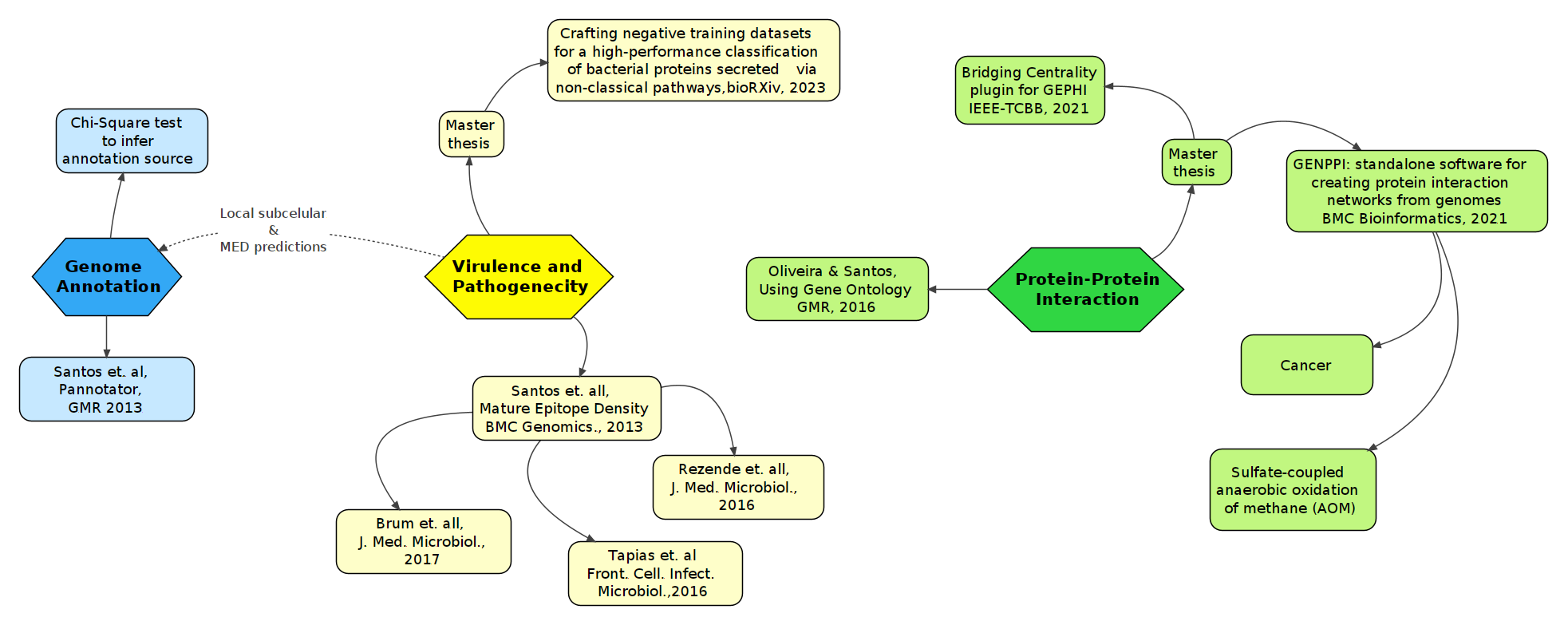
Despite these challenges, our research focuses on three complementary branches: Genomic Annotation, Target Discovery for Vaccines, and Protein Interaction Networks.
Bypassing the O(N2) memory wall of Transformer auto-attention to democratize long-context LLM inference on commodity, unaccelerated CPU hardware.

"Throwing RIS messages into the ocean of mainstream media."
The expansion of Large Language Model (LLM) context windows is hindered by the quadratic scaling O(N2) of self-attention memory allocations. The RIS-Kernel resolves this bottleneck. Without retraining model weights, it leverages sparse stochastic geometry to reduce attention complexity to O(N log N), enabling 65k context inference on commodity CPU servers.
This 100% national technology was officially submitted to the Brazilian Ministry of Science, Technology and Innovation (MCTI) within the scope of the Brazilian AI Plan (PBIA) to support data sovereignty and local inference in public bodies.
Interestingly, the algorithm was not born in traditional NLP, but in the field of Bioinformatics. It was originally designed in our lab to handle network saturation while mapping bacterial protein-protein interactions in the GenPPi software, and later transposed to LLMs due to shared topological properties.
Divulgação Científica: IA sem Supercomputadores
Science communication explaining the project's background and purpose.
Watch directly on YouTubeRIS-Kernel Technical Presentation
Technical talk recorded for the IKE'26 Conference.
Watch directly on YouTubeAutomated tool for annotation of pan-genomes.
Target selection based on immunoinformatics and exported prokaryotic proteins.
Standalone software for creating protein interaction networks from genomes.
Highlighting recent work as Senior/Last Author (2021-2026)
Scientific Reports (Nature Portfolio)
2026Computational and Structural Biotechnology Journal
2025BMC Bioinformatics
2025Environmental Microbiology Reports
2025Ecology and Evolution
2024BMC Genomics
2024Neural Computing and Applications
2024Biomedical Informatics
2023Int. Journal of Bioinformatics and Intelligent Computing
2021BMC Bioinformatics
Current Research Projects & Students